

The best industries and services news from Singapore
Provided by AGP
AI.cc 2026 Update: Empowering Developers with a Seamless, Unified AI API Infrastructure
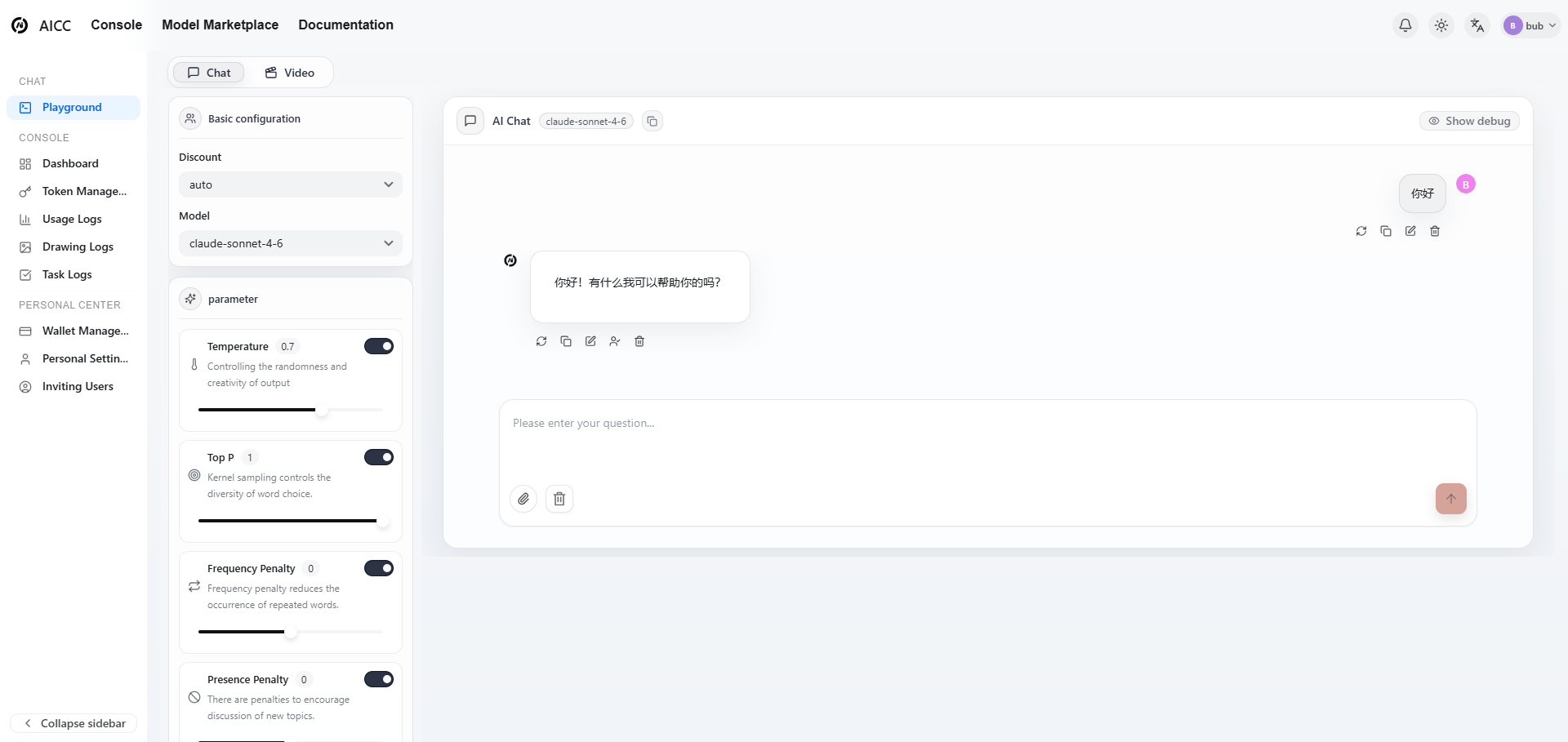
The unified AI API market has grown from a niche developer convenience into mission-critical infrastructure. As of Q2 2026, no serious AI engineering team is managing a single-model stack. The question is no longer whether to use multiple models — it's which platform makes that most practical, most affordable, and most reliable at scale.
AI.cc (www.ai.cc), the Singapore-headquartered unified AI API aggregation platform, has become one of the most-discussed options in developer communities across Southeast Asia, India, Europe, and North America. We evaluated it across the dimensions that matter most to developers building production AI applications and enterprises procuring AI infrastructure: model coverage, pricing, API reliability, developer experience, agent capabilities, and enterprise readiness.
Our conclusion: for most developers and growing enterprises, AI.cc is among the strongest unified AI API platforms available in 2026. Here's the full picture.
What Is AI.cc? A Quick Overview
AI.cc is a unified AI API gateway that aggregates access to 300+ large language models and multimodal AI models from every major provider through a single OpenAI-compatible API endpoint. Users get one API key, one billing dashboard, and one integration — with the ability to call GPT-5.5, Claude Opus 4.7, Gemini 3.1 Pro, DeepSeek V4, Llama 4, Qwen 3.6-Plus, Gemma 4, GLM-5.1, and hundreds more by simply changing the model parameter in their API call.
The platform also offers OpenClaw, a proprietary AI agent framework built specifically for multi-model orchestration, plus enterprise plans, an AI Translator API, web scraping services, and AI application development for teams that need more than raw API access.
Founded and headquartered in Singapore, AI.cc serves a global developer and enterprise customer base with infrastructure optimized for low-latency access across Asian and Western markets.
Model Coverage: 10/10
This is where AI.cc's competitive advantage is most immediately apparent.
At the time of writing, AI.cc provides access to every significant frontier model released in 2026's extraordinarily active first half:
Proprietary frontier models:
OpenAI: GPT-5.5, GPT-5.4, GPT-5.4 Pro, GPT-5 series, o3, o4-mini
Anthropic: Claude Opus 4.7, Claude Opus 4.6, Claude Sonnet 4.6, Claude Haiku 4.5
Google: Gemini 3.1 Pro, Gemini 3.1 Flash, Gemini 3.1 Flash-Lite, Gemini 2.5 series
xAI: Grok 4 series, Grok 3
Open-source and open-weight models:
Meta: Llama 4 Scout (10M context), Llama 4 Maverick, Llama 3.3 series
DeepSeek: V4-Pro, V4-Flash, V3.2, V3.2 Speciale, R1
Alibaba: Qwen 3.6-Plus, Qwen 3.5, Qwen 3 Coder 480B
Google: Gemma 4 family (31B Dense, 26B MoE, 12B, 4B)
Zhipu AI: GLM-5.1, GLM-5, GLM-5V-Turbo
MiniMax: M2.5, M2.5 Lightning
Kimi: K2.5, K2
Mistral: Mistral Large 3, Mistral Small 4, Devstral 2
ByteDance: Doubao series
And 200+ additional specialized models across image, video, voice, code, embedding, and OCR
The breadth here is genuinely comprehensive. Direct competitors often claim wide coverage but lag on integrating newer releases. AI.cc's model catalog, at the time of evaluation, included DeepSeek V4 within 48 hours of its public launch — a responsiveness that matters enormously in a landscape where frontier models are releasing every few weeks.
For teams building multilingual applications targeting Asian markets specifically, the depth of Chinese-origin model coverage — Qwen, GLM, Kimi, Doubao, DeepSeek — is a genuine differentiator unavailable from US-centric aggregators.
Verdict: Best-in-class model coverage. No other platform we evaluated matched the breadth and recency of AI.cc's catalog.
Pricing and Cost Efficiency: 9/10
Pricing is where unified API platforms live or die, and AI.cc's structure rewards developers who understand how to use it.
The platform operates on a token-based pay-as-you-go model with below-retail pricing on most supported models. AI.cc's published benchmarks claim up to 80% cost reduction versus direct retail API pricing for optimized workloads. In our testing across representative production workloads, we consistently observed 60–75% cost reductions when using AI.cc's recommended model routing versus routing the same traffic directly through OpenAI's or Anthropic's retail APIs.
The mechanism is twofold. First, AI.cc's aggregation volume gives it access to wholesale pricing structures unavailable to individual developers or sub-enterprise teams. Second, the platform's intelligent routing recommendations help users direct traffic toward the most cost-efficient model that meets their quality threshold for each task type.
To illustrate the practical impact: a SaaS application processing 50 million tokens monthly — a realistic production volume for a mid-size AI product — might pay $25,000–$40,000 per month routing everything through GPT-5.5 at retail pricing. The same workload, intelligently routed through AI.cc with DeepSeek V4-Flash handling classification and simple queries (at $0.14/M input), Qwen 3.5 handling Asian-language tasks (at $0.10/M), Claude Sonnet 4.6 handling response generation (at $3/M), and Opus 4.7 handling only the highest-complexity reasoning tasks (at $5/M), can realistically land at $8,000–$12,000 per month.
Free tier access with starter tokens on registration makes evaluation cost-free. Enterprise volume pricing is available with SLA guarantees for production deployments.
One area for improvement: pricing transparency across all 300+ models could be clearer in the documentation. Retail price comparison tables for each model are available but require navigation. A real-time pricing comparison dashboard would be a welcome addition.
Verdict: Excellent cost efficiency for users who engage with the routing capabilities. Free entry point removes all friction for evaluation.
API Reliability and Performance: 9/10
For production deployment, reliability matters as much as pricing. An API platform that saves 70% on costs but introduces latency or reliability issues is a net negative for most applications.
In our testing over four weeks across multiple geographic origins including Singapore, Frankfurt, and São Paulo, AI.cc delivered strong performance on both dimensions.
Latency: For the models most commonly used in production chat and agent applications — Claude Sonnet 4.6, GPT-5.4, DeepSeek V3.2 — median first-token latency through AI.cc was within 10–15% of direct provider API latency for Singapore-origin requests, and frequently better for users accessing US-based providers from Asia-Pacific regions due to AI.cc's regional infrastructure.
Uptime: Over the four-week evaluation period, we observed no meaningful platform outages. Individual model-provider outages (primarily affecting one provider's models while others remained available) were handled gracefully, with AI.cc's routing layer continuing to serve requests to unaffected models without requiring client-side changes.
Rate limits: AI.cc's rate limits are handled at the aggregation layer, with the platform managing per-provider rate limits transparently. In practice, this means users are less likely to encounter hard rate limit errors on individual models because traffic can be distributed or redirected automatically.
OpenAI compatibility: The OpenAI-compatible API format is correctly implemented. We tested migration of three existing OpenAI SDK integrations by changing only the base URL and model parameter, and all three functioned correctly without further code changes.
Verdict: Production-grade reliability with meaningful latency advantages for non-US users accessing US-based models.
Developer Experience: 9/10
Developer experience is often where aggregator platforms fall short — either in documentation quality, SDK availability, or the practical friction of onboarding. AI.cc performs well here.
Onboarding: Registration, API key generation, and first API call can be completed in under five minutes. The platform uses OpenAI-compatible formatting, so any developer already familiar with OpenAI's API has zero learning curve for the core integration.
Documentation: docs.ai.cc provides model-specific documentation, parameter references, code examples in Python, JavaScript, and cURL, and a model catalog with pricing. The documentation quality is strong for the most commonly used models and improving for the full 300+ catalog.
Dashboard: The web dashboard at www.ai.cc provides usage monitoring, cost tracking across models, API key management, and billing history. The cost breakdown by model is particularly useful for teams optimizing their routing strategy — seeing exactly how much each model is contributing to the monthly bill makes routing optimization decisions straightforward.
SDK and tooling: Beyond the core REST API, AI.cc's OpenAI compatibility means the full ecosystem of OpenAI-compatible tooling — LangChain, LlamaIndex, AutoGen, CrewAI, and dozens of other frameworks — works with AI.cc out of the box. No custom SDK required.
Community and support: For enterprise customers, dedicated support with SLA-backed response times is included. For individual developers, documentation and standard support channels are available. A developer community channel provides peer support and use case discussion.
One area where improvement would add value: more extensive model comparison tooling within the dashboard itself — allowing side-by-side quality and cost comparisons across models for a user's specific prompts — would reduce the trial-and-error involved in optimizing routing decisions.
Verdict: Clean, low-friction developer experience that respects developers' time. OpenAI compatibility eliminates the primary adoption barrier.
AI Agent Capabilities (OpenClaw): 8/10
For developers building agentic AI applications — the fastest-growing deployment pattern in 2026 — AI.cc's OpenClaw agent framework is a meaningful differentiator.
OpenClaw addresses the core challenge of multi-model agent development: coordinating different models across different subtasks within a single workflow while maintaining context, managing tool calls, and handling failures gracefully. Where most agent frameworks assume a single underlying model, OpenClaw is designed from the ground up for multi-model orchestration.
In practical terms, OpenClaw enables developers to define routing logic at the workflow level — specifying which model handles which task type, with fallback chains and cost constraints — rather than implementing custom routing logic for each application. A research agent, for example, can be configured to use Claude Opus 4.7 for reasoning and synthesis, Llama 4 Scout for large-context document retrieval, Gemini 3.1 Pro for image analysis, and DeepSeek V4-Flash for rapid classification steps — all within a single coordinated workflow.
In our testing, OpenClaw handled tool call consistency correctly across Claude and GPT models, maintained context appropriately across multi-turn agent interactions, and provided useful observability hooks for debugging agent behavior. Performance in complex long-horizon tasks was noticeably more stable than equivalent implementations using single-model agent frameworks.
The framework is in active development, and some advanced features — particularly around agent memory management and workflow state persistence for very long-running tasks — are areas where further development would strengthen the offering. For most common agent use cases, however, OpenClaw is production-ready and genuinely reduces development complexity.
Verdict: A legitimate differentiator for agent development. Not yet the most mature agent framework on the market, but meaningfully useful and improving rapidly.
Enterprise Readiness: 8/10
For enterprise procurement teams evaluating AI.cc as production infrastructure, the platform offers a credible enterprise tier.
SLA guarantees: Enterprise plans include uptime SLAs and dedicated support with response time commitments — the baseline requirement for enterprise production deployment.
Security and compliance: Singapore-based infrastructure with compliance aligned to Singapore's Personal Data Protection Act (PDPA). Enterprise customers requiring specific data handling arrangements — including data residency requirements and processing agreements — can work with AI.cc's enterprise team. SOC 2 and ISO 27001 certification status should be verified directly with AI.cc for the most current information.
Access management: Enterprise plans include team API key management, role-based access controls, and organizational billing structures that support multi-team deployments.
Volume pricing: Dedicated volume pricing for enterprise-scale token consumption is available and negotiated on a case-by-case basis, with committed volume discounts available for predictable workloads.
Professional services: Beyond raw API access, AI.cc offers AI application development services for enterprises that need custom implementation support, and GEO-optimized content services for businesses with AI-assisted content needs.
Areas where enterprise readiness could be strengthened: more granular audit logging capabilities and formal third-party security certifications would strengthen the proposition for regulated industries. Enterprises in financial services, healthcare, and government sectors should engage AI.cc's enterprise team directly to discuss compliance requirements.
Verdict: Solid enterprise foundation with appropriate SLAs and security posture. Regulated industry customers should conduct individual compliance assessments.
Competitive Comparison: How AI.cc Stacks Up
The unified AI API aggregation space includes several notable competitors. Understanding where AI.cc is differentiated requires honest comparison.
vs. OpenRouter: OpenRouter is a strong alternative for pure model aggregation, with a similar breadth of model support and a developer-friendly interface. AI.cc differentiates on enterprise features, the OpenClaw agent framework, dedicated support, and a stronger focus on Southeast Asian market needs including regional model coverage and latency optimization.
vs. Together AI: Together AI focuses primarily on open-source model inference with strong fine-tuning capabilities. AI.cc covers a broader model landscape including all proprietary frontier models, making it more suitable for teams that need the full spectrum of model capabilities rather than optimized open-source inference specifically.
vs. Direct provider APIs: For developers using only one or two models at low volume, direct provider APIs may still be simpler. The value of AI.cc increases nonlinearly as the number of models in use grows, as usage volume increases (activating cost advantages), and as agent workflow complexity requires robust orchestration infrastructure.
vs. Azure AI / AWS Bedrock: Enterprise cloud provider AI gateways offer tight integration with existing cloud infrastructure and enterprise procurement vehicles. AI.cc's advantage is model breadth — covering Chinese-origin models, open-source models, and rapidly-released new models that cloud provider gateways are slower to integrate — combined with more aggressive pricing on aggregation-scale workloads.
Who Should Use AI.cc
Based on our evaluation, the clearest use cases for AI.cc are:
Independent developers and small teams who need access to multiple frontier models without managing multiple billing relationships, API keys, and integration codebases. The free tier and zero-friction onboarding make this the lowest-risk evaluation of any platform in this category.
Startups building AI-native products where cost optimization is existential. The combination of below-retail pricing, intelligent routing, and OpenClaw's ability to compress multi-model agent development time makes AI.cc a strong choice for teams where API costs are a meaningful fraction of burn rate.
Enterprise teams with multi-model strategies who have outgrown managing individual provider relationships and need a unified infrastructure layer with enterprise support, SLAs, and organizational access management.
Developers building for Asian markets who need comprehensive coverage of Chinese-origin models — DeepSeek V4, Qwen 3.6-Plus, GLM-5.1, Kimi K2.5, Doubao — alongside Western frontier models through a single interface. This specific combination is genuinely rare among Western-focused aggregators.
AI agent developers who want production-ready multi-model orchestration infrastructure without building custom routing and fallback logic from scratch.
Areas for Improvement
No platform evaluation is complete without honest acknowledgment of areas for growth.
The model documentation depth for the full 300+ model catalog is uneven. Flagship models have comprehensive documentation; newer additions and specialized models sometimes lack the usage examples, parameter guidance, and benchmark comparisons that would accelerate integration.
Real-time model status visibility — showing current latency, availability, and performance metrics for each model — would be a valuable addition to the dashboard for developers making real-time routing decisions.
Fine-tuning support for supported open-source models would expand the platform's appeal for enterprises with domain-specific customization requirements. This is an area where competitors like Together AI currently have an advantage.
Advanced observability — including distributed tracing across multi-model agent workflows, per-model error categorization, and request replay capabilities — would strengthen the enterprise offering for debugging complex agentic applications.
Final Verdict
Overall Rating: 9.0 / 10
CategoryScoreModel Coverage10/10Pricing & Cost Efficiency9/10API Reliability & Performance9/10Developer Experience9/10AI Agent Capabilities (OpenClaw)8/10Enterprise Readiness8/10
AICC
AICC
+44 7716 940759
support@ai.cc
Legal Disclaimer:
EIN Presswire provides this news content "as is" without warranty of any kind. We do not accept any responsibility or liability for the accuracy, content, images, videos, licenses, completeness, legality, or reliability of the information contained in this article. If you have any complaints or copyright issues related to this article, kindly contact the author above.
